Hemp.com Inc. -Forging Hemp as the Future of Sustainability - Home of Hemp
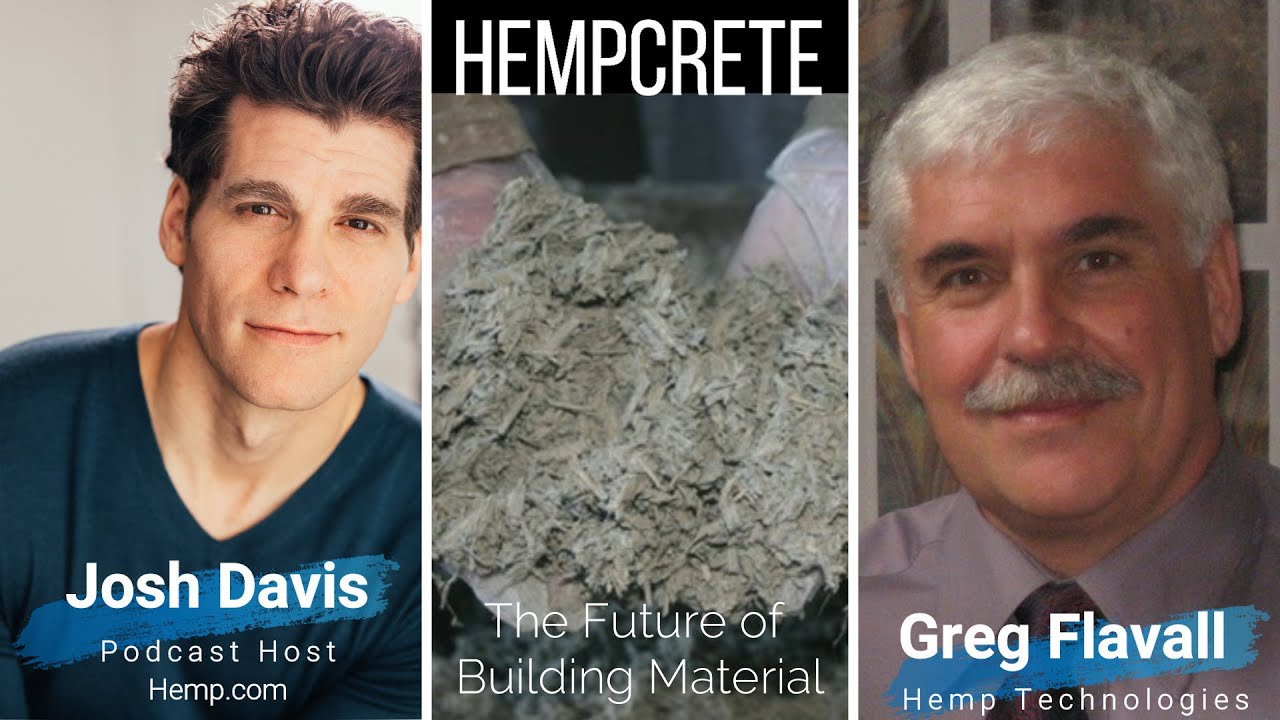
Building the Future: The Rise of Industrial Hemp and Hempcrete
 In the realm of sustainable construction, hempcrete has emerged as a game-changer. Composed of industrial hemp, lime, and water, this innovative material offers a range of benefits that traditional concrete cannot match. From increased strength and durability to superior fire resistance and environmental friendliness, hempcrete is revolutionizing the way we build.
One of the key advantages of hempcrete is its sustainability. Industrial hemp is a fast-growing crop that requires minimal water, pesticides, and fertilizers to thrive. Unlike traditional concrete, which is responsible for significant carbon emissions during production, hempcrete actually sequesters carbon dioxide from the atmosphere as it cures, making it a carbon-negative building material. This makes hempcrete an ideal choice for eco-conscious builders and developers looking to reduce their environmental footprint.
 In addition to its environmental benefits, hempcrete also boasts impressive performance characteristics. Thanks to its unique composition, hempcrete is lightweight yet incredibly strong, making it ideal for a wide range of construction applications. It is also highly breathable, which helps regulate indoor humidity levels and improve air quality. And because it is made from natural, non-toxic materials, hempcrete is safe for both builders and occupants.
Perhaps most importantly, hempcrete is cost-effective. Unlike traditional concrete, which requires specialized equipment and skilled labor to produce and install, hempcrete can be mixed on-site using simple tools and techniques. This reduces construction costs and allows builders to create durable, energy-efficient structures without breaking the bank. In fact, studies have shown that hempcrete buildings can be up to 20% cheaper to construct than their traditional counterparts, making them an attractive option for budget-conscious developers.
As awareness of the environmental and economic benefits of hempcrete continues to grow, so too does its popularity in the construction industry. From residential homes and commercial buildings to schools, hospitals, and beyond, hempcrete is being used to create sustainable, resilient structures that stand the test of time. And with ongoing research and innovation, the future looks brighter than ever for this remarkable building material.
In conclusion, hempcrete represents a paradigm shift in the world of construction. Its combination of sustainability, performance, and affordability make it a compelling choice for builders, developers, and homeowners alike. As we look to address the challenges of climate change and resource depletion, hempcrete offers a promising solution that paves the way towards a more sustainable and resilient built environment.
The Hemp.com post HempCrete – Building the Future appeared first on Hemp.com Inc.- Hemps Home. Home of Hemp! Hemps Home
420GrowLife
via www.KahliBuds.com
Hemp Author, KahliBuds, 420GrowLife




 Industrial hemp cleans soil. And we mean really cleans soil. Known as
  You are what you eat. There is a micro-nutrient deficiency in many developing countries. As explained above, hemp’s phytoremediation properties make it phenomenal at absorbing various particles in soils. This means that hemp can actually be used to absorb good nutrients from soils resulting in crops fortified with essential nutrients. A recent study demonstrated that hemp could absorb selenium from soils. Selenium is necessary for numerous physiological functions such as thyroid function, immune system response, fertility, and antioxidant function. Hemp therefore presents an extremely promising manner to feed and nourish on a large scale.
 You may have heard that at least one of the drafts of the Declaration of Independence was written on hemp paper. While this claim is hotly contested, the truth is that a massive percentage of the paper used in the world was, in fact, made from hemp fiber. Some conservatively estimate that 75% of the paper derived from hemp by the late 1800s. We do know Thomas Jefferson authored the final product on parchment, but many other historically significant documents were written on hemp paper including: Magna Carta, King James Bible, Thomas Paine’s Common Sense, Mark Twain’s works, Lewis Carrol’s Alice in Wonderland, and many more.
 Hemp helped humanity’s artistic drive. Hemp was widely used in canvases for painting. In fact, the word “canvas” can be traced to the Anglo-French word “canevaz” and ultimately the Latin word “cannapaceus” which means “made of hemp.” Given hemp’s almost limitless utility, we think the phrase “blank canvas” is particularly fitting. Hemp not only can provide the canvas, it can provide the paint as well. This unique paint is ecofriendly and natural using hemp oil as the main ingredient instead of harsh chemicals or heavy metals.
 Many people have heard of hemp rope. But the hemp plant contributed to historical ship construction and operation in a far more comprehensive manner. The canvas used for sails relied on hemp. Caulking the wooden hulls of the ships involved hemp. Ships frequently, if not always, carried stores of hemp seed. Over 100,000 pounds of hemp went into the construction of America’s oldest naval ship, Old Ironsides, launched in 1797 and still a fully commissioned Navy ship with a crew of 60 officers and sailors.
 There is a famous photograph of an old Ford being hit with a hammer to demonstrate the astonishing strength of the car’s body built from—you guessed it—industrial hemp. Yet, few realize that automotive bioplastics is a growing aspect of car building. Recent data shows that 20% of an average car’s weight is composed of plastics. BMW, Mercedes, Audi, and Volkswagen make use of hemp in door panels, dashboards, and other components. Hemp is poised to be an even more important part in car building’s future.
 Ever since the industrial
  Hemp is not only useful, it is strong. “Its fibers are stronger than steel,” says Bruce Linton, co-founder and former CEO of Canadian cannabis giant Canopy. The executive recently created Collective Growth, a “blank check company” that raised $150 million in less than two months and debuted on Nasdaq in May with the goal of creating a global industrial hempire.
 In the 1930s, Ford had a whole facility destined to extract biodiesel from hemp biomass. The reason?
  The sports world was on tilt this last week as Mike Tyson “boxed” Roy Jones Jr. in a four round exhibition match. Many loved it, some hated it. Millions watched.


 To define “organic CBD,” we need to go all the way back to the origins of CBD — hemp. The hemp plant contains hundreds of compounds. The primary compound is “cannabidiol,” or CBD. After it’s extracted, CBD is processed into a wide array of health products, the most popular is organic CBD oil (organic hemp oil).
 Is organic CBD oil better? The best way to decide this is to look at the facts. Due to the
  To understand the different types of organic CBD, it’s a good idea to first take a look at exactly what CBD is — and what it does, and doesn’t, contain.

 In 1941, hemp fibers (and flax) were used in resin matrix composites for the bodywork of a Henry Ford car which was able to withstand ten-times the impact on an equivalent metal panel. Unfortunately the car did not make into general production due to economic limitations at the time.