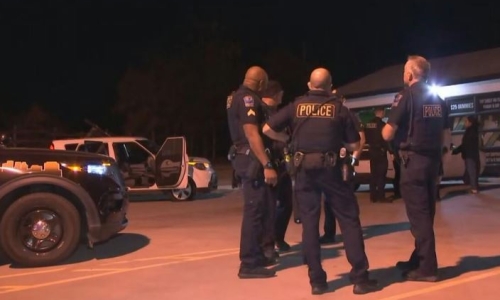
Police said this isn’t the first time this dispensary has been hit, but this is possibly the worst damage it’s seen. Police believe someone drove a white Kia through the front of the building. Tulsa Police are investigating a medical marijuana dispensary burglary Thursday morning near I-244 and
With less than a month left before a New Hampshire commission is due to put forward a plan for how to legalize adult-use marijuana sales through a system of state-controlled stores, members were visibly frustrated at a Thursday meeting with the group’s slow, meandering progress through a draft bill circulated last month by the group’s chair, Sen. Daryl Abbas (R).
Lawmakers on the panel grew combative with one another over issues such as penalties for public consumption of cannabis, dual licenses for existing medical marijuana businesses and the very handling of the commission meetings themselves. After more than two hours of sometimes testy debate, for instance, Sen. Rebecca Whitley (D) raised a point of order requesting members to “be more respectful of our process here and our other commission members”—a critique that led to a squabble with Abbas over who interrupted whom.
The 19-member Commission to Study With the Purpose of Proposing Legalization, State Controlled Sales of Cannabis and Cannabis Products has only two more meetings scheduled before its December 1 deadline to submit a proposed bill that the legislature is supposed to take up in the 2024 session. A number of key questions remain unanswered.
So far the commission has spent the past three of its seven meetings attempting to go line-by-line through Abbas’s reference bill, which he initially described as a loose starting point for the commission’s final product. The body currently has about 17 pages of the 37-page document left to review.
The group’s next meeting is set for November 16, and members have decided to begin an hour earlier than usual to make better headway. It’s expected to stretch from 9 a.m. into midafternoon.
It’s not yet clear exactly how existing medical marijuana businesses, known as alternative treatment centers (ATCs), would be folded into the new franchise-based system, which proponents have likened to McDonald’s or Dunkin’ Donuts. Members of the commission have debated various approaches, including requiring ATCs to obtain separate licenses for adult-use sales or allowing all licensed retailers post-legalization to sell both medical and adult-use products.
That’s one of a number of measures the commission has left undecided for now, leaving it for a later meeting or for lawmakers to hammer out once the legislative session begins.
“Nothing’s final, by the way,” Abbas told colleagues at one point during the most recent meeting. “Remember, this is going to go through committees and multiple changes” once the proposal gets to the legislature.
Perhaps the most contentious topic taken up Thursday was how to penalize people caught smoking or vaping cannabis products in public. Some on the panel felt penalties should be strict even for the first offense, while others warned that criminalizing public use would be ineffective and likely cause further harm.
Abbas advocated a stiffer approach than the $500 civil violation included in his draft bill, calling for a misdemeanor penalty on second and subsequent offenses that could include jail time. “This is not something you’re going to violate accidentally,” he said.
Rep. Tim Cahill (R) also called for misdemeanor penalties, saying that public use of legal marijuana in Maine and Massachusetts were “crumbling their states.”
“We want to be be able to breathe in public. That’s, like, a God-given right,” he said. “I know some people don’t like that word, but it’s a God-given right.”
Other members of the panel tried to push back, arguing that criminal penalties don’t actually stop public consumption.
“I think we all agree that smoking in public is not a good thing,” said Frank Knaack, who represents the ACLU on the commission. “The research is quite clear that criminalizing conduct like this is not effective. And in fact, it puts hurdles in front of people.”
Abbas insisted there must be a point at which it makes sense to charge someone with a misdemeanor for smoking or vaping in public. “I’m just asking you how many times somebody could violate this provision—intentionally smoke or vape cannabis in a public place—before you’re comfortable with it,” he said. “How many times would someone have to be found responsible for a violation before you would be comfortable with it being a Class B misdemeanor?”
Knaack replied that Abbas’s question was missing the point. “My concern is that criminalizing this type of conduct is counterproductive to public safety,” he said.
Ultimately, the commission didn’t agree on consequences for public consumption. Abbas said the matter would likely be taken up by the legislature after the bill is formally introduced.
In addition to leaving some matters for another day, the commission also struck some notable sections from the draft bill. One would have prohibited local police from working with federal agencies to investigate or enforce federal cannabis law against state-compliant entities, a provision Abbas characterized as a “sanctuary policy” because of its similarity to laws sometimes used to limit cooperation with federal immigration law.
“My understanding is that if this language stays in there, this might fall apart,” he said, not elaborating. Members agreed to scrap the provision through a show of hands.
The committee also removed a section that would have established that the smell of marijuana alone does not constitute probable cause under state law to stop or search a person or vehicle. “I don’t think we need to do that in statute,” Abbas said, asserting that under state precedent, the smell of alcohol wasn’t sufficient for probable cause.
“If the scent of alcohol is not in itself probable cause to search, it’s the same thing with cannabis,” he said. “That’s basically cutting and pasting precedence. I don’t think we need to do that in statute, so we can strike that.”
Other matters that came up at Thursday’s discussion were the serving size of infused edibles—the group decided on 5 milligrams THC—and a possible per se limit to establish driving under the influence based on THC in a person’s blood. On the latter issue, members wanted to know more about how the amount of cannabis consumed translates to THC levels in blood.
“Let’s say it’s 5 nanograms per milliliter,” Abbas asked. “How much would I have to consume?”
“That’s the $64,000 question,” replied commission member John Bryfonski of the New Hampshire Association of Chiefs of Police. “I have no idea what that limit would be for you or anyone else in the room.”
Another issue discussed Thursday was whether the New Hampshire Liquor Commission would oversee all licensees or co-regulate the industry with the Department of Health and Human Services, which currently runs the state’s therapeutic cannabis program. Others suggested establishing some sort of advisory body with specialized expertise.
A no-go for Abbas in any legalization measure is home cultivation, he said. “That is an absolute dealbreaker with this bill. If it’s in here, we might as well just adjourn and call it a day,” he said.
While some members’ patience seemed to wear thin during the meeting, the most heated back-and-forth came during final half hour. Following various tangents, questions to guest speakers and members of the panel talking over one another, Sen. Rebecca Whitley (D) addressed Abbas.
“Can I just say, Mr. Chair, we need to regain control about how this commission is interacting with each other,” she told her Republican colleague.
“Are you raising a point of order?” Abbas replied.
“Yes, a point of order,” Whitley said. “We need to be more respectful of our process here and our other commission members, and not interrupting each other and letting each other finish and people that are raising their hand—”
Abbas cut her off. “You stated your point of order.”
“Yet again—” began Whitley.
“I get it,” said Abbas.
“No. Senator, again,” Whitley insisted. “We need to be more respectful of letting people finish their point and having people respond to that and not interrupting each other. So I would ask that the chair takes control of that. Again, please.”
At that point another member of the commission, Rep. John Hunt (R), leaned into his microphone. “I apologize,” he said loudly, as though Whitley’s criticism was directed at him.
As Abbas began to respond to Hunt, Whitley jumped in to clarify that her comments weren’t directed exclusively at him.
“You just interrupted me!” complained Abbas, knocking on the table. “We’re not going to interrupt anymore, and that includes me.”
“And me, as well,” Whitley added.
“You interrupted again,” Abbas shot back.
After a bit more discussion, the panel began to discuss its coming schedule before calling it a day. Whitley again seemed to criticize Abbas’s handling of the process.
“Besides scheduling, I don’t think going line by line is going to get us—we’re not going to have time to do that,” she said. “And so maybe the chair wants to consider a process that would be more efficient to get us to where we need to be.”
Abbas defended the commission’s progress, saying he felt members were “coming to somewhat of a consensus.”
“I think there’s a lot of actually open questions,” Whitley replied.
Over the course of the past several weeks, some of those who’ve been watching the commission’s progress have been disappointed.
Timothy Egan, chair of the board of advisors for the New Hampshire Cannabis Association (NHCANN), is one of them. The way things are shaping up, he said, “I don’t know that the commission bill will be something that people will want to vote for.”
“I’m concerned that the legislators who want to vote to legalize cannabis are going to look at this bill and go, ‘That’s not the right way to do it,'” Egan, a former member of the New Hampshire House, said. “And so while this commission means well, I’m not sure if they’re going to be able to get this bill passed.”
“It’s taking a long time, and I don’t think that they’re taking it so seriously,” Egan added. “If they were, they’d be meeting more frequently, having multiple hearings a week. I just think they’re letting the boat go slowly so they don’t have to make changes that they’re not interested in.”
Throughout the process, it’s been apparent than many on the commission are approaching legalization hesitantly or even begrudgingly. Egan pointed out that members have seemed more eager to hear from groups warning about the public health dangers of legalization than regulators or industry members with expertise about how other adult-use cannabis systems function.
Under the statute that created the commission, NHCANN is supposed to be consulted in the review process, Egan said. But despite repeated outreach efforts, no one has welcomed his comments or seriously considered the group’s alternative proposed legislation, he said.
“When you make legislation, the best way to do it is to build consensus, hearing all the voices and getting them all at the table,” he argued. “I don’t think there’s true consensus coming out of this commission bill.”
Before the commission began Thursday’s debate, it heard comments from Ari Pollack, a lawyer representing the New Hampshire Coalition for Responsible Cannabis Regulation, who described his client as “comprised of a large beer and beverage distributors now serving most of New Hampshire.”
“They have modern, state-of-the-art warehousing, professional drivers, trucking fleet insurance, the ability to track inventory, tax products, make deliveries. They know what they’re doing,” Pollack said.
He recommended the commission consider adding an additional license category for distributors, which would be able to transport marijuana products between cultivators and retailers. Cultivators could still transport their own products, he said, but alcohol distributors could offer another method that would be operated by businesses familiar with compliance issues around controlled substances.
Joseph Mollica, chair of the New Hampshire Liquor Commission said he thought the suggestion was “a great idea” and thanked Pollack. None of the members objected to adding the new language to the bill.
Egan pointed to the exchange as an example of commission members falling back on what they know rather than trying to learn.
“It allows him to go, ‘Great! Here’s a vendor that we understand,'” Egan said of Mollica, whose department would lead regulation of legal marijuana. “But those vendors are unknown and are not going to be well versed in the transportation of marijuana. They put beer in a truck and they move it. This is like produce.”
At its next meeting, in addition to continuing its review of Abbas’s draft bill, the commission is slated to hear from a representative from the New Hampshire State Treasury.
Under the legislation that created the study group, commissioners were tasked with studying the feasibility of a state-run cannabis model and specifically drafting legislation that:
Allows the state to control distribution and access
Keeps marijuana away from kids and out of schools
Controls the marketing and messaging of the sale of marijuana
Prohibits “marijuana miles” or the over-saturation of marijuana retail establishments
Empowers municipalities to choose to limit or prohibit marijuana retail establishments
Reduces instances of multi-drug use
Does not impose an additional tax so as to remain competitive
Hunt, a commissioner who chaired the House Commerce and Consumer Affairs Committee this year, worked extensively on marijuana reform issues during the session and attempted to reach a compromise to enact legalization through a multi-tiered system that would include state-controlled shops, dual licensing for existing medical cannabis dispensaries and businesses privately licensed to individuals by state agencies.
The underlying commission legislation that the governor signed into law with the legalization study provisions would also remove an existing requirement that pain patients try opioid-based treatments first before receiving a medical cannabis recommendation for their condition.
It also includes provisions to clarify that the state’s hemp law is not intended to authorize the sale of hemp-derived intoxicating products, such as delta-8 THC.
In May, the House separately defeated a different marijuana legalization amendment that was being proposed as part of a Medicaid expansion bill.
Also, the Senate moved to table another piece of legislation that month that would have allowed patients and designated caregivers to cultivate up to three mature plants, three immature plants and 12 seedlings for personal therapeutic use.
After the Senate rejected reform bills in 2022, the House included legalization language as an amendment to separate criminal justice-related legislation—but that was also struck down in the opposite chamber.
Here’s the full draft legislation being discussed by the commission:
Veterans fought for freedom, but those seeking medical cannabis face unfair treatment under current federal laws. Each Veterans' Day, we pay tribute to the brave men and women who have defended our country and its freedoms. Across America, communities will have parades, vigils, and services to honor
Starting on December 7, adults 21 and older will be able to lawfully possess and cultivate marijuana throughout the state as regulators work to craft rules for licensing cannabis businesses. The governor, lieutenant governor and GOP leadership in the legislature are already eyeing changes to the voter-approved statewide initiative. In the meantime, residents of Harbor View, Risingsun and Sugar Grove have become the latest localities to remove criminal penalties for possessing more than double the amount of marijuana that’s permitted under the new state law.
Activists with the Sensible Movement Coalition (SMC) and NORML Appalachia of Ohio have helped pass local decriminalization in dozens of cities across Ohio over recent years. The groups haven’t decided whether they will continue to pursue further localized reform now that the state has enacted legalization, but they view their years of advocacy as complementary, familiarizing voters with cannabis policy in the build-up to Tuesday’s election.
“We are really proud to have locally decriminalized over 40 cities in Ohio leading to legalization,” Chad Thompson, executive director of SMC, told Marijuana Moment on Friday. “We feel over the past 10 years, this local effort has made a huge difference in the opinions and beliefs of cannabis and allowing the public to see that cannabis isn’t going to make the sky fall.”
“Over the last 10 years of active work, we knew this day was coming,” he said. “The real prize this November is seeing our country continue to march toward a complete and total revolution of all marijuana laws where we can all be a little bit more free as Americans.”
Ahead of the election, Ohio Secretary of State Frank LaRose (R) intervened to ensure that Harbor View would see decriminalization on the ballot after the Lucas County Board of Elections voted not to certify the activist-led cannabis measure in light of a local prosecutor’s concerns. After a review, he ordered the board to reverse its decision and qualify what is titled “The OG Wild Bill Marihuana Ordinance.”
That Harbor View marijuana measure narrowly passed by a margin of 53 percent to 47 percent. There were a total of 30 ballot cast for the local issue, meaning it was approved by a margin of two votes.
The Risingsun decriminalization ordinance passed 67 percent to 33 percent, according to the Wood County Board of Elections.
And Sugar Grove’s marijuana initiative was approved 52 percent to 48 percent.
The ordinances decriminalize possession of up to 200 grams of cannabis for personal use. That’s a higher possession limit than what’s permitted under the statewide legalization law, which will allow adults to have up to 2.5 ounces (about 70 grams) starting next month.
With respect to the statewide legalization vote, Gov. Mike DeWine (R) and Lt. Gov. Jon Husted (R) were among Republican leaders to oppose Issue 2. Both top state officials have since said they will respect the will of voters—but they’re also imploring the GOP-controlled legislature to amend the statutory law before legalization takes effect.
Husted, for his part, said on Thursday that he understands why, “for various reasons, people want legal, regulated methods to buy” marijuana.
I accept the voters' verdict that recreational marijuana is now legal in Ohio. I understand that, for various reasons, people want legal, regulated methods to buy it. For instance, an assurance that it's not laced with fentanyl or associated with criminal activity.
“However, I don’t believe that people want to be overwhelmed by smoke in public places like restaurants or parks,” he said. “I also don’t believe that they want it sold on every street corner or convenience store or excessive advertising that targets children.”
“We must also bear in mind that impaired driving jeopardizes all of our safety. Therefore, we have a responsibility to establish some policy guardrails to prevent this new experiment from getting out of hand,” he said. “Also, it’s essential to recognize that even though recreational marijuana is legal, many jobs will still require workers to pass a drug test.”
“The smart thing to do with the tax revenue generated by it should contribute to tax relief for working families,” he said. “Let’s make sure Ohio does this as responsibly as possible.”
Senate President Matt Huffman (R) and House Speaker Jason Stephens (R) have already discussed their own independent interest in amending the cannabis law, with a focus on THC limits and tax policy. A spokesperson for the Senate GOP majority similarly told The Statehouse News Bureau that the legislature “may consider amending that statute to clarify some questionable language regarding limits for THC,” and added that “tax rates are an issue.”
The governor acknowledged on Thursday that “what the people have clearly told us is they want legal marijuana in Ohio.”
“We are going to see that they have that, but we’ve also got to live up to our responsibility to all the people in the state of Ohio, whether they voted for it or voted against it…that we do this in a very responsible way, we do it in a respectful way,” he said. “And we do it, frankly, the Ohio way.”
For his part, Rep. Casey Weinstein (D), who has championed cannabis reform in the legislature and sponsored bipartisan legalization legislation, told Marijuana Moment that “Ohioans spoke loud and clear” at the ballot on Tuesday.
“We value privacy. We value freedom. We value liberty,” he said. “The leaders in the legislature should heed the call and uphold the will of the voters.”
Prohibitionist organizations that campaigned against Issue 2, meanwhile, are set on a fundamental undermining of the newly approved law, with some describing plans to pressure the legislature to entirely repeal legalization before it’s even implemented.
Voters were only able to decide on the issue after lawmakers declined to take the opportunity to pass their own reform as part of the ballot qualification process. They were given months to enact legalization that they could have molded to address their outstanding concerns, but the legislature ultimately deferred to voters by default.
Unlike the top state Republican lawmakers, one of the state’s GOP representatives in Congress—Rep. Dave Joyce, co-chair of the Congressional Cannabis Caucus, said in September that he would be voting in favor of the initiative in November. He encouraged “all Ohio voters to participate and make their voices heard on this important issue.”
Senate Banking Committee Chairman Sherrod Brown (D-OH) said late last month he voted in favor of the legalization ballot initiative, calling it a “hard decision” but one that was based on his belief that the reform would promote “safety” for consumers.
Meanwhile, Vivek Ramaswamy, a 2024 Republican presidential candidate, said he voted against a ballot initiative to legalize marijuana in Ohio because he’s concerned the federal government could “weaponize” criminalization against people who are engaged in state-legal cannabis activities under the “fake” pretense that they’re protected from federal prosecution.
Senate Majority Leader Chuck Schumer (D-NY), for his part, said on Wednesday that Ohio’s vote to legalize marijuana at the ballot is one of the latest examples of how Americans are rejecting “MAGA extremism,” and he added that he’s committed to continuing to work on a bipartisan basis “to keep moving on bipartisan cannabis legislation as soon as we can.”
Meanwhile, with Ohio enacting the reform, there’s also a renewed sense of urgency to follow suit in neighboring Pennsylvania, with the governor’s office calling it “another reminder” of the need to legalize cannabis.
Each Veterans' Day, we pay tribute to the brave men and women who have defended our country and its freedoms. Across America, communities will have parades, vigils, and services to honor our nation's heroes and the many sacrifices made to ensure America stays "the land of the free and the home of